Tree Attack
Spruce occurs naturally in the Harz Mountains, but its rapid growth and commercial value have also led to extensive planting, creating forests dominated by a single species and supporting a long-established forestry industry.
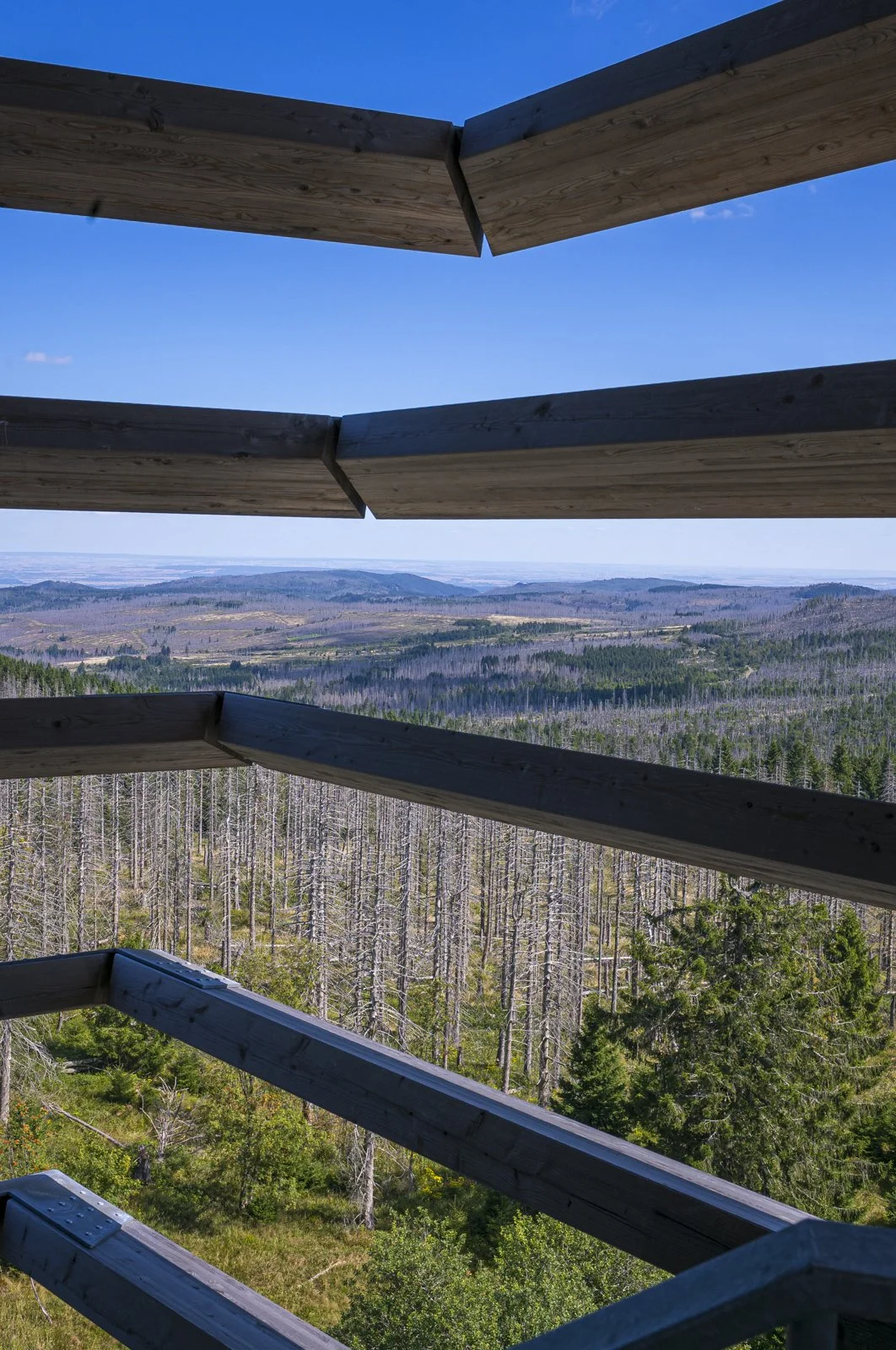
Over the past decade, increasingly dry and warm conditions associated with climate change have placed these forests under considerable stress. Water-starved spruce trees produce less resin, weakening one of their natural defences against the European spruce bark beetle. Normally part of the forest ecosystem, the beetle readily attacks weakened trees. As vulnerable trees become increasingly abundant, beetle populations multiply, eventually reaching levels capable of overwhelming healthier spruce.
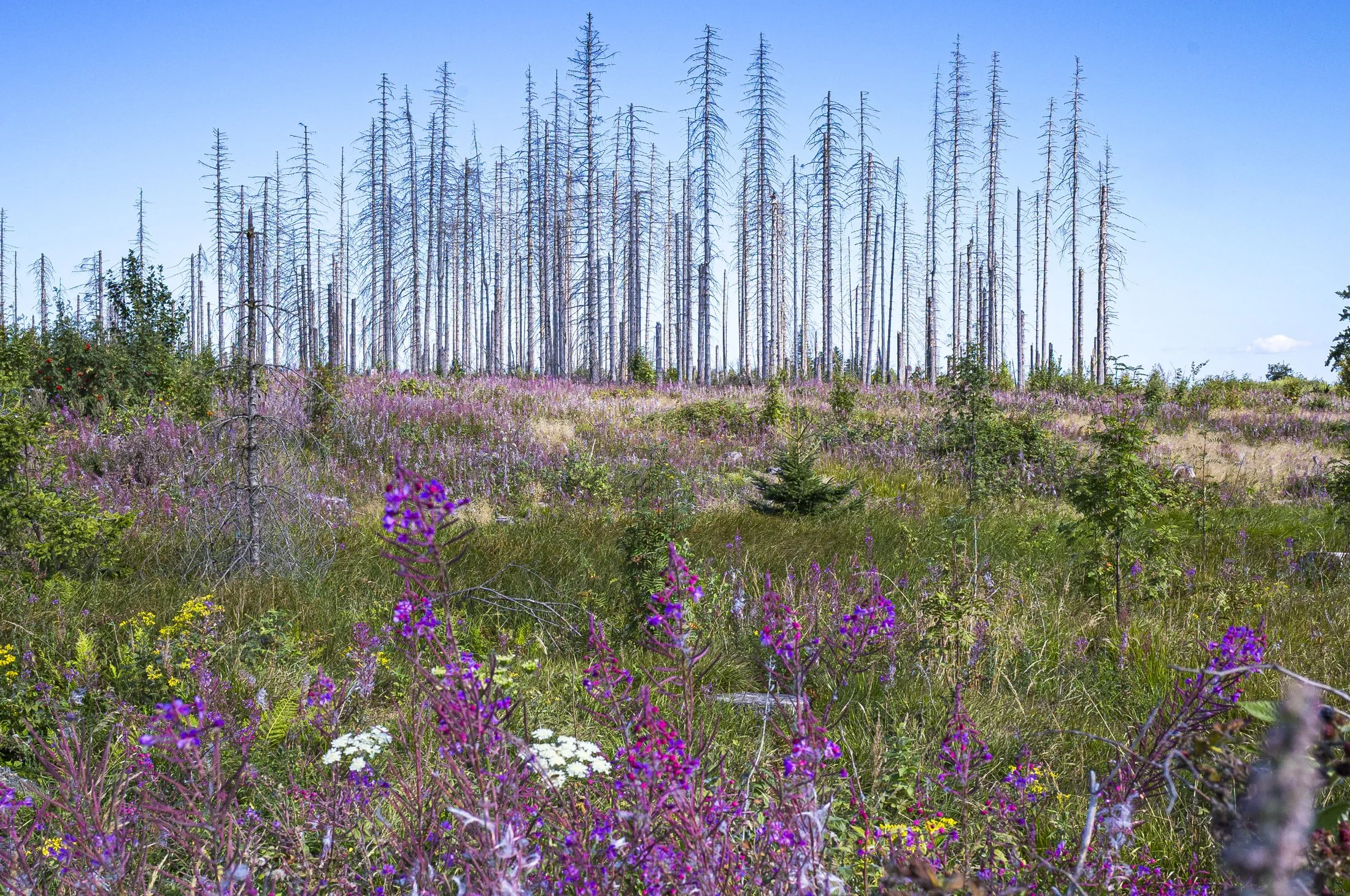
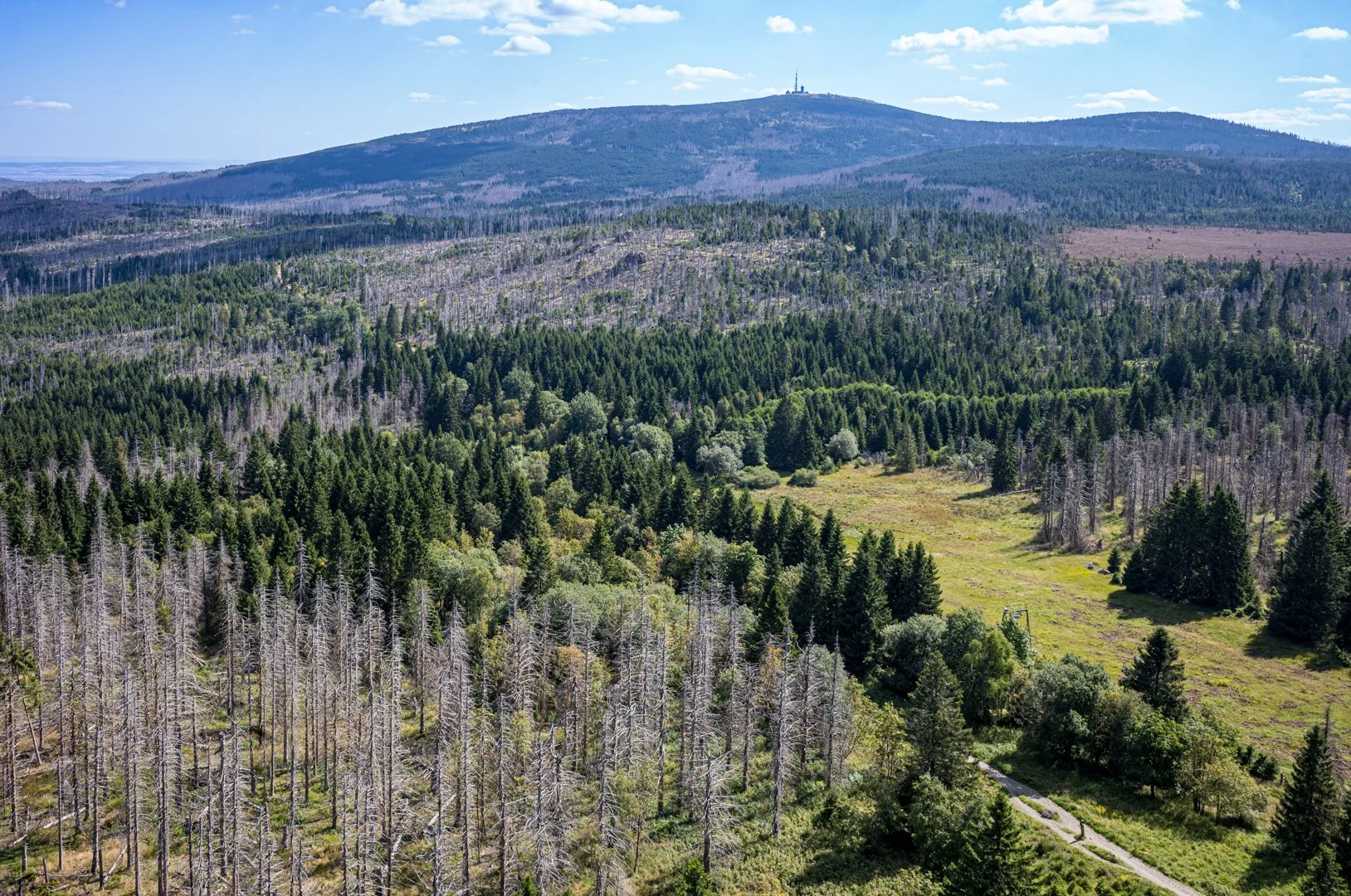
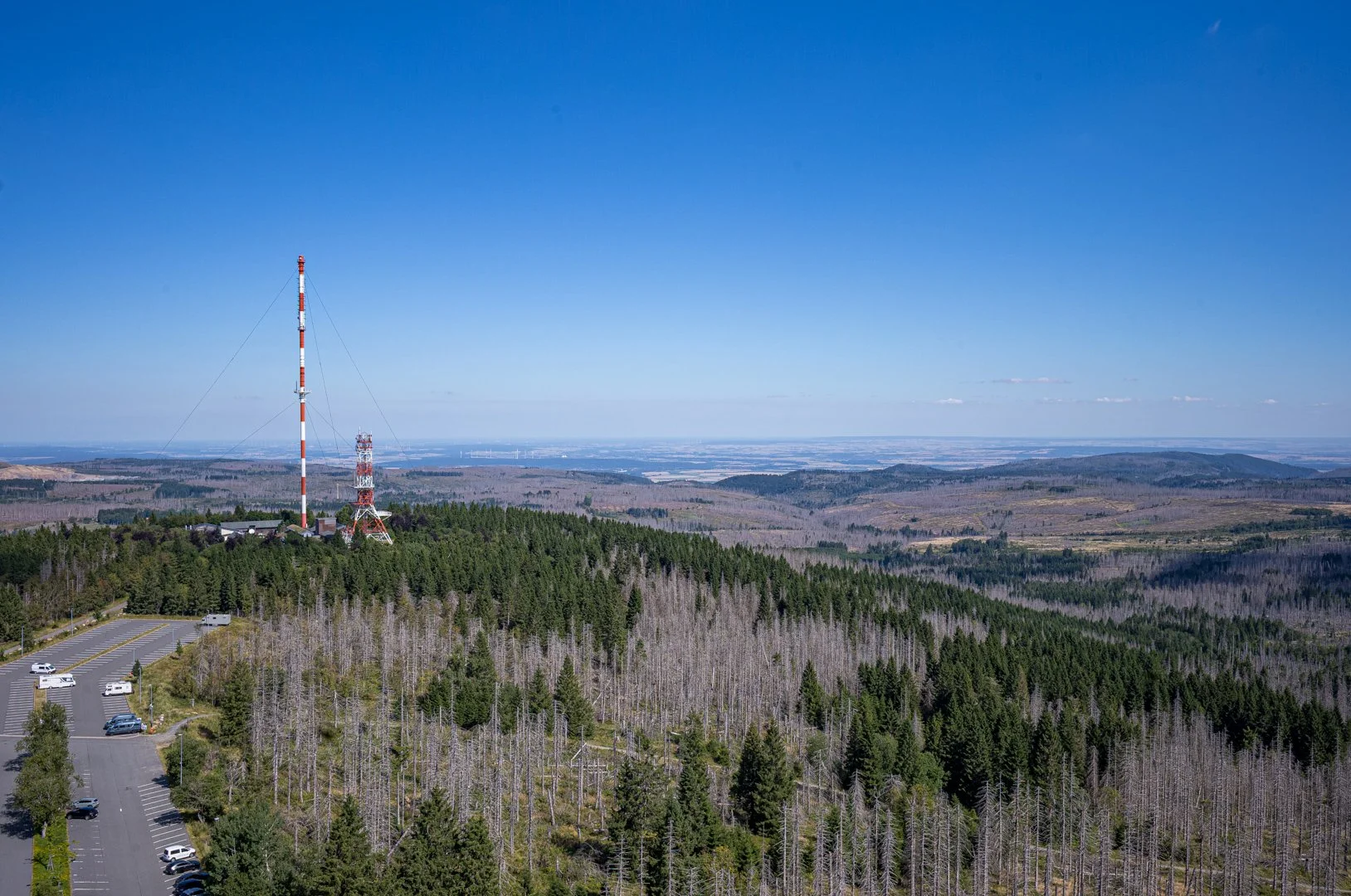
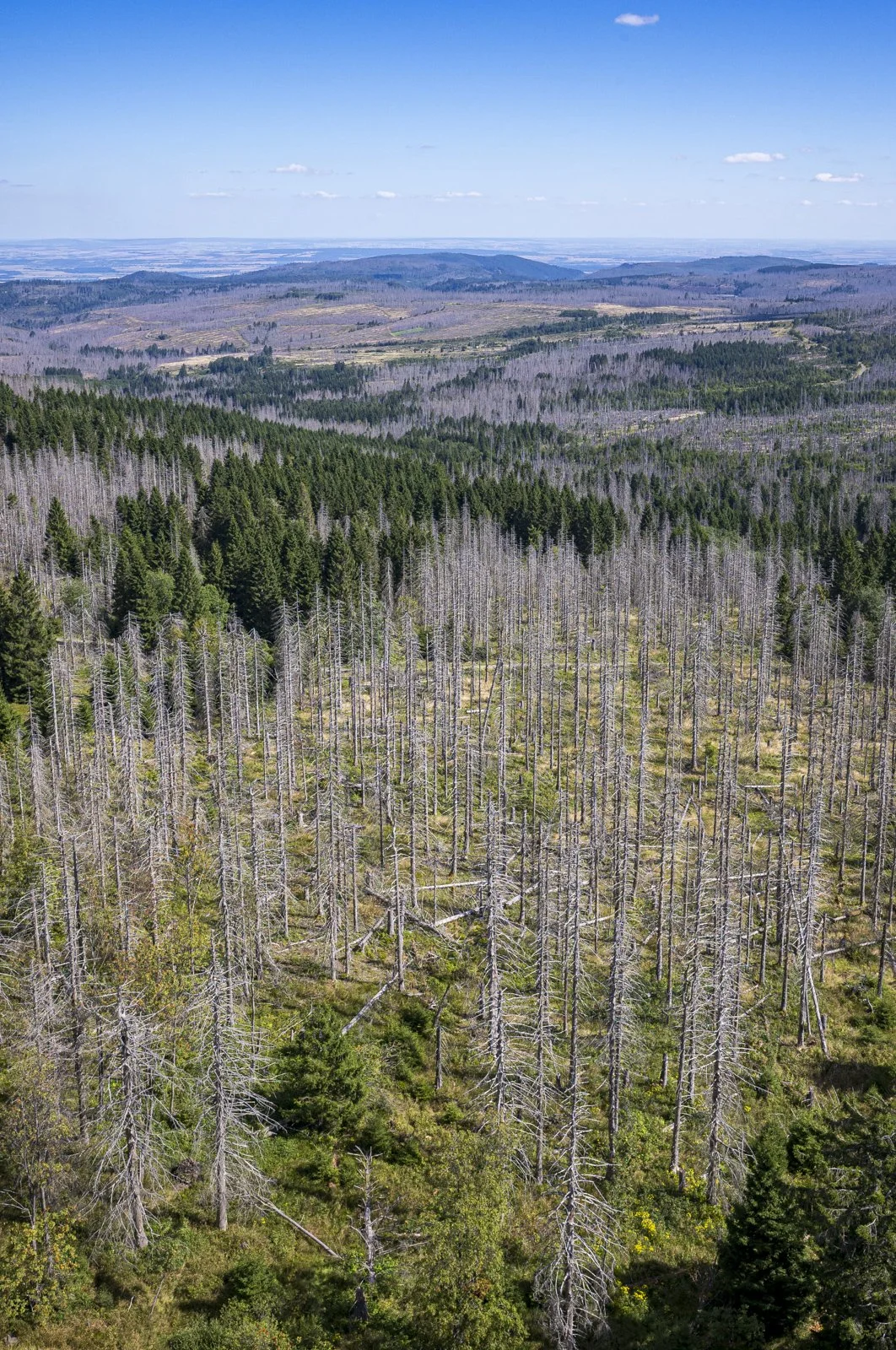
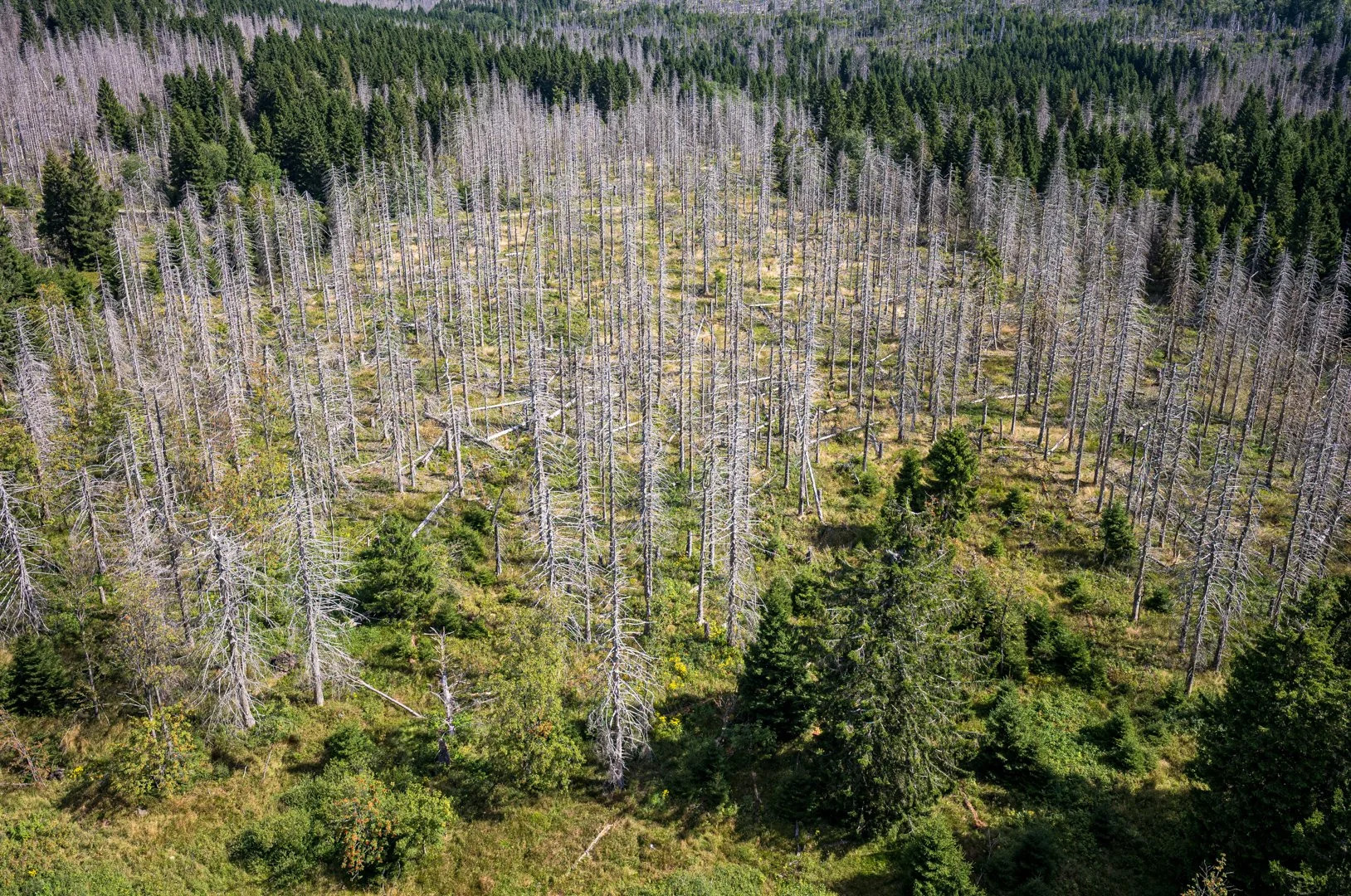
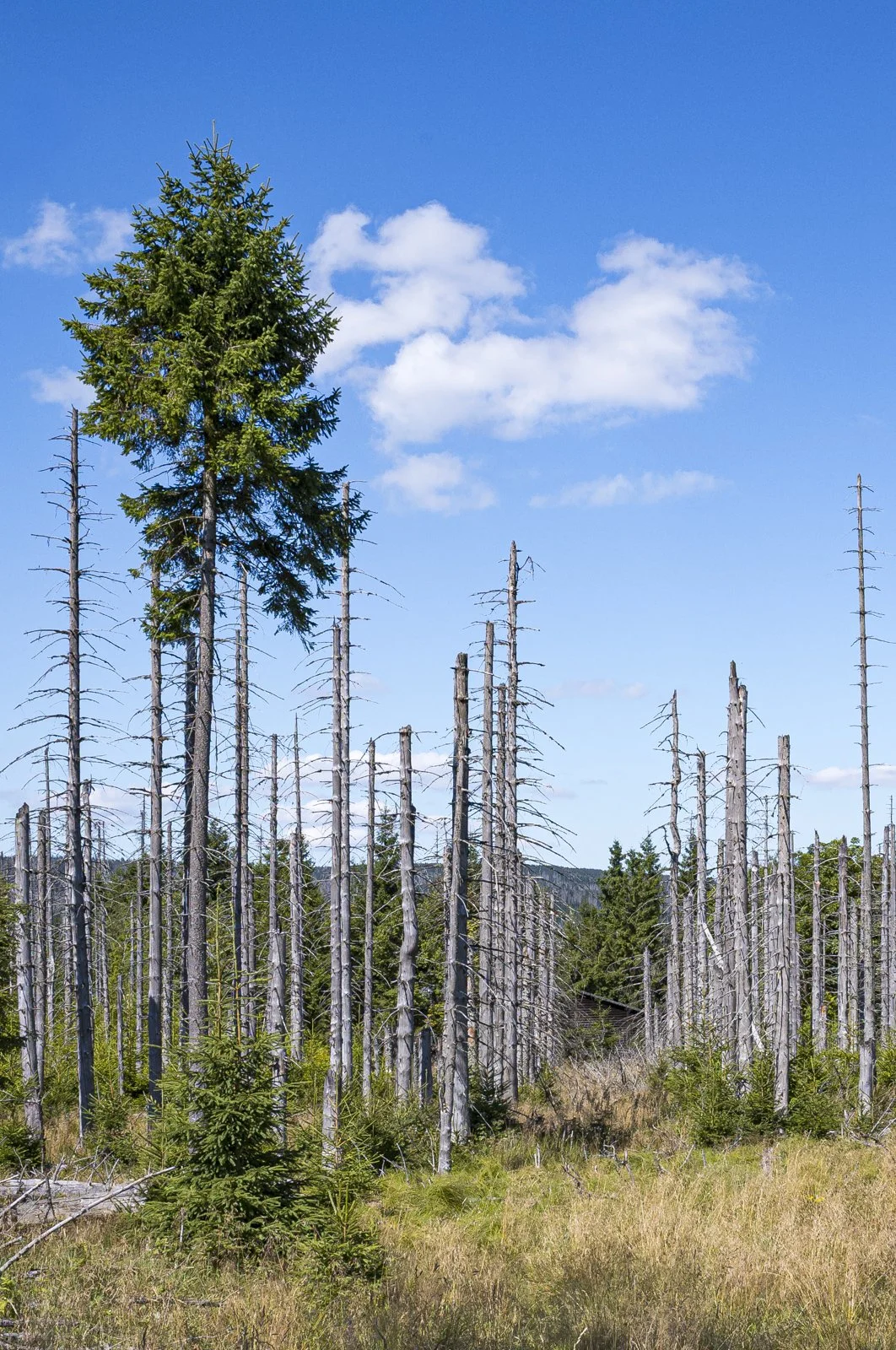
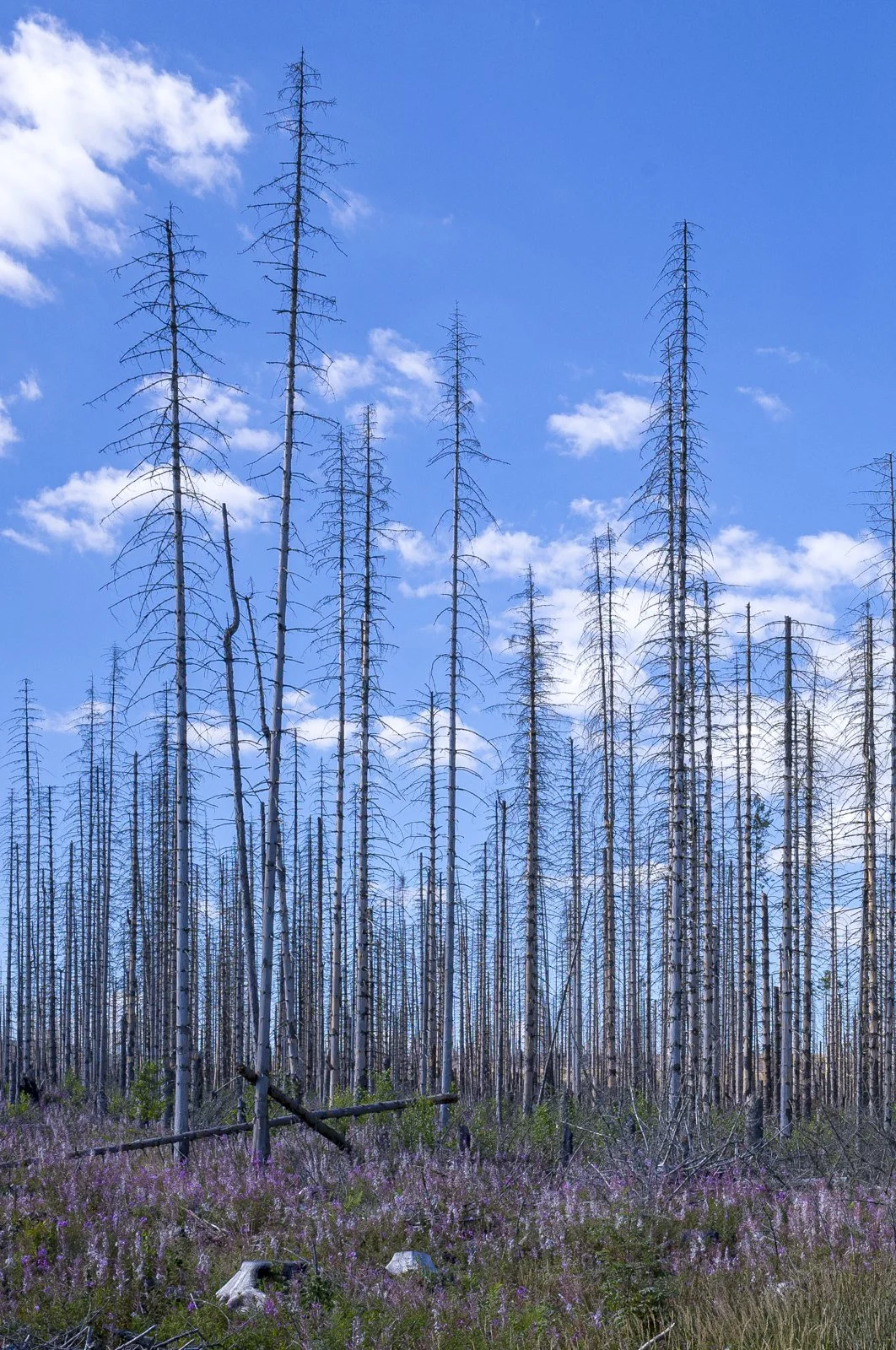
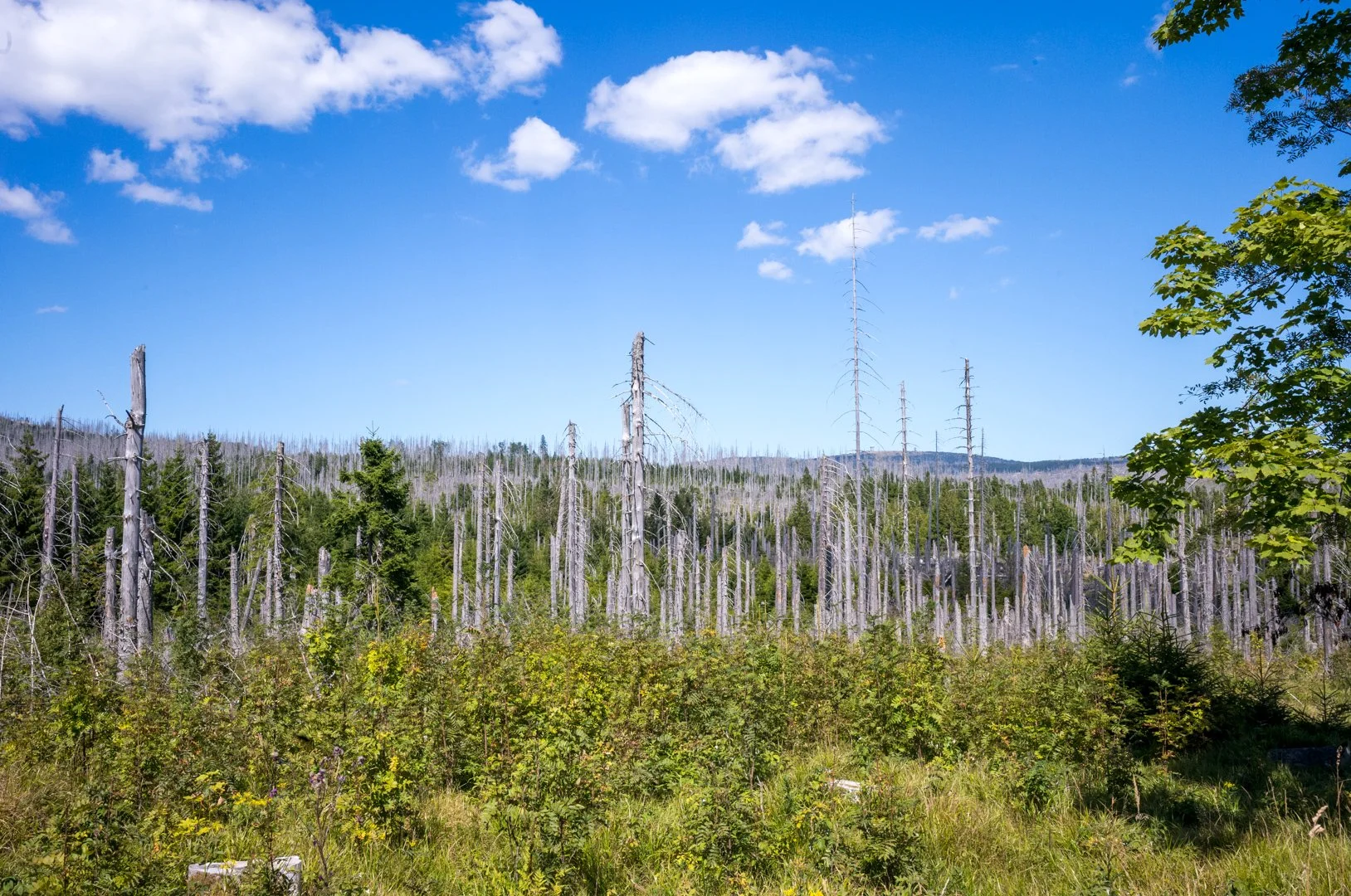
The resulting transformation is dramatic. Across parts of the Harz, once dense green forests have become landscapes of standing deadwood, fallen trunks and open ground.
Yet decline is also creating opportunity. As spruce retreats, light reaches the forest floor and other tree species begin to establish themselves. What appears to be destruction may therefore represent a transitional landscape: the breakdown of a vulnerable forest structure and the gradual emergence of a more diverse woodland better adapted to a changing climate.